
Columbus, OH — Cooperation among Ohio’s electric cooperatives went into high gear on Friday, March 13, after wind gusts nearing 80 mph swept across a large portion of the state. The National Weather Service recorded gusts of 71 mph at John Glenn Columbus International Airport. Electric cooperatives across Ohio were prepared to respond.
“We try to communicate with our member cooperatives ahead of a storm if we believe the forecasted weather is going to cause widespread outages,” said Chris Napier, Director of Safety Training & Loss Prevention at Ohio’s Electric Cooperatives.
Napier goes into StormCenter mode just ahead of severe weather. “Our process is already in place should anyone require mutual aid. We are always prepared to assist.”
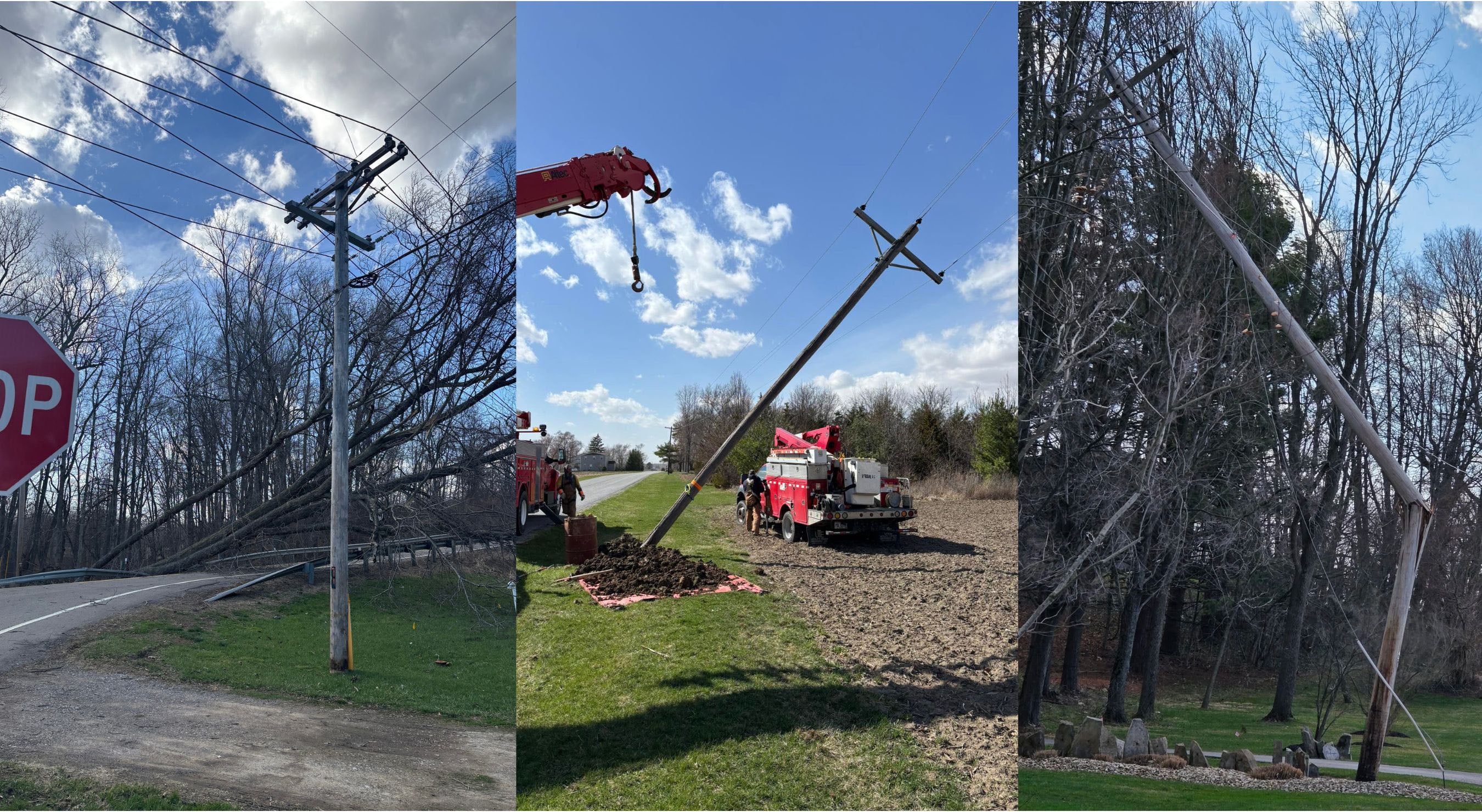
Snapped utility poles, trees down on power lines, and a substation without power caused the majority of outages.
(Pictured above, from left to right, are damage photos from Holmes-Wayne Electric Cooperative, Midwest Electric, and Firelands Electric Cooperative.)
Seven Ohio cooperatives called for mutual aid during the storm:
- Holmes-Wayne
- Carroll
- Guernsey-Muskingum
- Consolidated
- The Energy Co-op
- Frontier
- Paulding Putnam
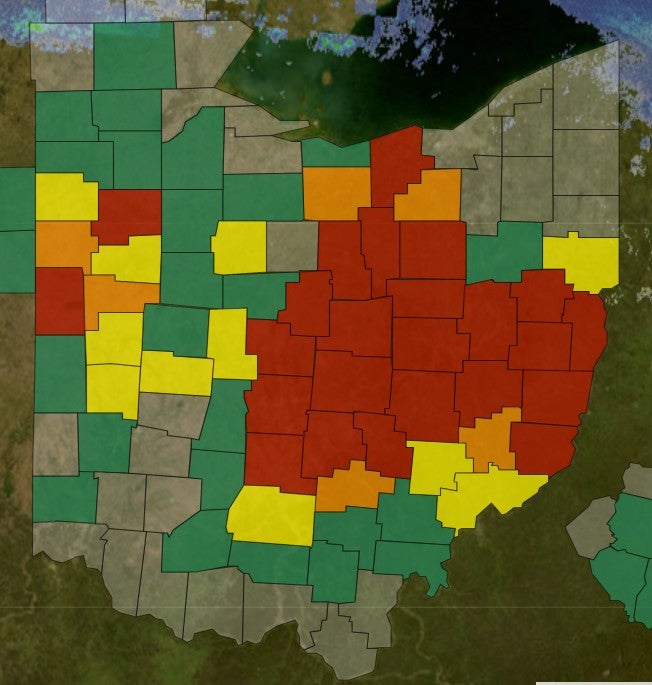
Holmes-Wayne experienced the most extensive damage, according to Napier. In true cooperative spirit, less-impacted cooperatives answered the call for mutual aid. Lineworkers worked around the clock to restore power, and the severity of the damage required multiple days of restoration work. One cooperative reported as many as 50 poles down at the height of the storm. The red area on the map below shows the peak concentration of outages statewide.
Cooperatives from within Ohio, along with crews from Indiana, West Virginia, and Kentucky, provided mutual aid. According to Napier, a total of 31 cooperatives, 90 lineworkers, 36 bucket trucks, and nine digger trucks participated in the restoration effort.
“It can be difficult to restore power after these events,” Napier said. “Trees are down, limiting access to the areas crews need to reach. Trees are lying across the infrastructure we’re trying to repair. Poles take time to replace—especially in remote areas that require specialized tracked equipment. Getting wire back in the air requires special precautionary techniques to ensure safety for the linemen, and that process can take a significant amount of time depending on the circumstances.”
Lineworkers understand what it means for members to be without power, but safety is the number one priority. “They are not working with competing priorities,” Napier said. “Safety is non-negotiable—period. The goal every day is to make sure everyone gets home safely, whether one member is without power or 10,000.”
The March 13 wind event was followed by additional strong winds just days later, prolonging restoration efforts. Napier said all power was fully restored by March 19.